How Do You Choose a Beer brewery system for Your Production Goals?
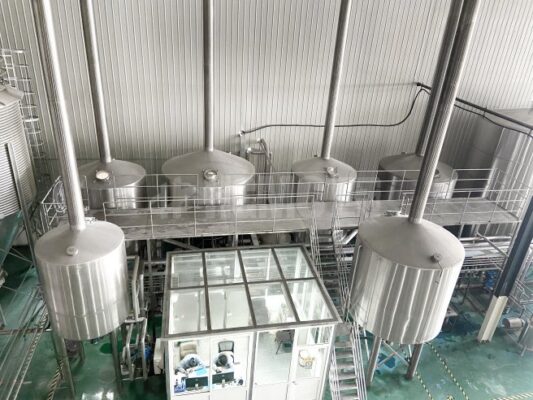
A suitable brewery system should be sized from finished beer demand, not tank volume alone. Start with annual packaged output, batch size, brew days, fermentation time, packaging speed, utility supply, and planned growth. For example, a brewery targeting 2,000 BBL/year at 10 BBL per batch needs about 200 nominal batches before process losses. At 12 brewing days per month, that is roughly 17 batches per month. A 14-day average fermentation period also requires enough fermenter volume to hold at least two weeks of production. Heating method, automation, glycol capacity, CIP design, floor loading, and future tank space then determine whether the selected system can support that schedule without excessive labor or idle equipment.
A brewery system should be specified around the amount of packaged beer a business expects to sell during a normal year. A useful starting point is the annual target, because it allows the rest of the plant to be calculated backward.
| Planning item | Example target |
|---|---|
| Annual packaged beer | 2,000 BBL |
| Nominal batch size | 10 BBL |
| Brewing frequency | 4 batches/week |
| Average fermentation time | 14 days |
| Packaging rate | 20 BBL/hour |
| Planned expansion | 50% |
A 2,000 BBL target divided by 10 BBL gives 200 nominal batches before wort, transfer, fermentation, and packaging losses are considered. If saleable yield is 92%, about 217 nominal batches are needed. At 48 production weeks per year, that is about 4.5 batches per week.
A brewery producing 10 BBL four times per week operates very differently from one producing 20 BBL twice per week, even when annual output is similar.
That difference makes batch scheduling the next calculation. A 10 BBL brewhouse may suit a taproom-focused business with many small releases, while a 20 BBL system can reduce the number of brewhouse turns for a portfolio dominated by core products. If 60% of annual sales come from two flagship beers, larger fermenters may improve scheduling because repeated batches can be combined into one tank.
The product mix also changes the required cellar size. Assume weekly wort production reaches 40 BBL and the average beer remains in fermentation for 14 days. The brewery needs roughly 80 BBL of working fermentation volume before adding spare capacity, cleaning time, lager production, or seasonal peaks.
If average residence time rises to 21 days, the same 40 BBL weekly schedule requires about 120 BBL of working fermentation capacity. A three-week lager program therefore changes the cellar requirement by roughly 50% compared with a two-week average.
| Average tank residence | Weekly production | Approx. working FV volume |
|---|---|---|
| 7 days | 40 BBL | 40 BBL |
| 14 days | 40 BBL | 80 BBL |
| 21 days | 40 BBL | 120 BBL |
| 28 days | 40 BBL | 160 BBL |
Fermenter size does not need to match brewhouse size. Two 10 BBL brews can fill one 20 BBL fermenter, which can reduce the number of tanks required for high-volume brands. For mixed portfolios, a combination such as 20 BBL, 10 BBL, and 5 BBL fermenters can provide more scheduling options.
A brewery making eight regular beer styles in 2026 may have very different cellar needs from a brewery producing only three core products. Small tanks can be useful for seasonal releases, pilot batches, and lower-volume products, while larger tanks can be assigned to brands responsible for 50% or more of annual sales.
The brewhouse itself should then be evaluated by process time. A two-vessel system can be adequate when brewing demand is moderate, while additional vessels can allow mashing, lautering, boiling, and whirlpool operations to overlap.
Suppose one brew takes 6 hours from mash-in to transfer. Four weekly batches consume about 24 brewhouse hours, before cleaning and setup. Increasing production to eight batches would bring that figure to roughly 48 hours. At that point, vessel configuration and labor availability become more important than nominal tank capacity.
Heating also needs to match the site. Electric systems can be practical where sufficient electrical service is already available. Direct-fire systems require suitable gas supply, combustion air, exhaust, and local code compliance. Steam systems add boiler or steam-generator requirements, condensate handling, water treatment, piping, and maintenance.
For a brewery planning 50% growth within five years, utility sizing should be reviewed against the expanded operating case rather than the opening-year schedule.
A system that fits today's production plan can still become difficult to use if its electrical, cooling, hot-water, or steam capacity cannot support additional tanks.
Cooling capacity deserves the same treatment. Fermentation produces heat, while wort cooling creates a short period of high cooling demand. The glycol system therefore needs to handle both tank temperature control and wort chilling.
For example, if a brewery starts with six 20 BBL fermenters and later adds three more, cellar volume rises from 120 BBL to 180 BBL, an increase of 50%. The original glycol design should be checked against that future tank count before pipe sizes, chiller capacity, and control points are finalized.
Water use should be calculated from brewing and cleaning requirements rather than finished beer volume alone. A brewery producing 2,000 BBL annually may process several times that amount in water across brewing, vessel cleaning, floor washing, packaging, and sanitation.
Hot liquor capacity also affects daily scheduling. When two batches are brewed on the same day, the hot-water system needs enough recovery capacity between batches. Heat recovered from wort cooling can be reused for cleaning or brewing water, depending on plant design.
Cleaning time must appear in the production schedule. A fermenter that holds 20 BBL but requires several hours for cleaning, sanitizing, inspection, and preparation is not available for immediate reuse.
If a brewery cleans four fermenters per week and each complete cycle takes 3 hours, that is 12 hours of tank turnaround time. At 200 batches per year, even a 15-minute reduction per cleaning cycle would recover approximately 50 labor hours annually.
Packaging should be matched to cellar output. A brewery producing 40 BBL per week but packaging only 10 BBL per hour needs at least four theoretical packaging hours per week, before changeovers, cleaning, downtime, and quality checks.
For cans, bottles, and kegs, the actual package rate matters more than the machine's maximum published speed. A filler rated at 60 cans per minute may not sustain that speed across every format, product change, sanitation cycle, and line stop.
| Area | What to compare |
|---|---|
| Brewhouse | Batch size, turns/day, heating method |
| Fermentation | Tank volume, residence time, cleaning cycle |
| Glycol | Chiller capacity, tank count, expansion |
| Hot water | Storage volume, recovery rate |
| CIP | Cleaning time, pump capacity, tank access |
| Packaging | Real hourly output, changeover time |
| Utilities | Power, gas, steam, water, drainage |
| Building | Height, doors, floor loading, service space |
The building can restrict equipment selection before brewing begins. Tank height, door width, floor loading, drainage, electrical service, gas connection, ventilation, and access for installation should be measured before final drawings are approved.
A 20 BBL fermenter that fits the production room may still require a doorway wider than the available entrance. Tall tanks also need clearance around fittings, manways, piping, insulation, and service areas. These dimensions should be checked with the complete vessel configuration rather than the shell dimensions alone.
Automation should be selected according to production frequency. A small brewery running four batches per week may not need extensive process automation. A brewery running two or three turns per day can obtain more practical value from automated temperature control, water dosing, valve sequencing, recipe management, and process recording.
Labor calculations help compare systems. If manual operation takes 5 labor hours per batch and a semi-automated system reduces that to 3.5 hours, 200 annual batches represent a difference of about 300 labor hours.
Automation should be assessed against actual batch frequency, staffing, maintenance requirements, and operator training, not only the equipment purchase price.
Supplier specifications should cover more than stainless-steel vessel volume. Buyers should review materials, weld quality, surface finish, jacket construction, insulation, sanitary fittings, pumps, valves, instrumentation, control components, documentation, commissioning, and spare-part availability.
A supplier quotation should also state what is excluded. Freight, rigging, electrical installation, piping, glycol equipment, CIP hardware, boiler connections, water treatment, and commissioning can materially change project cost.
For expansion planning, a 2026 brewery targeting 3,000 BBL/year may choose to install only part of its projected cellar capacity while reserving floor space and utility connections for future tanks. If the long-term target is 4,500 BBL, the layout should allow roughly 50% more fermentation volume without forcing a complete redesign.
The final comparison should therefore use measurable production inputs. Annual packaged volume, saleable yield, batch size, brew hours, fermentation days, tank count, packaging rate, utility capacity, labor hours, and expansion percentage provide a workable basis for selecting equipment.
A brewery system that matches those numbers can be evaluated against actual production requirements rather than a generic vessel size or supplier package. The preferred configuration depends on the brewery's product mix, operating schedule, available building services, and planned production level.